
HSK 2 grammar
53 topics of HSK 2: the pattern, a short explanation and examples. The full explanation, common mistakes and exercises for each topic are in the app.

HSK 1 HSK 2 HSK 3 HSK 4 HSK 5 HSK 6 HSK 7–9
- 别 / 不要 + V — Prohibitions: "Don't!" with 别 and 不要别 (bié) or 不要 (búyào) before a verb means "don't!" With 了 at the end, it means "stop": 别说了. 别 sounds slightly more conversational; 请不要 is polite.
- A 还是 B ? — "This or that?": questions with 还是A 还是 B? asks "A or B?" when the listener must choose one: 你喝茶还是喝咖啡? — "Would you like tea or coffee?" Do not add 吗 at the end: 还是 already marks the question.
- 为什么 ……? — "Why?": 为什么为什么 (wèishénme) means "why, what for." It usually comes after the subject and before the verb (你为什么不来?), or at the beginning of the sentence. Do not add 吗 to this question; answer with 因为.
- 多 + adj.? — "How…?": 多大, 多高, 多远多 (duō) + adjective in a question means "how…?": 多大 — how old / how big, 多高 — how tall, 多远 — how far, 多长时间 — how long. 有 often comes before 多.
- 最 + adj. / verb — "Most", "the most": 最最 (zuì) means "most" or "the most". It goes before an adjective or a verb expressing feelings: 最好 — best, 最喜欢 — like the most. 很 is not needed alongside 最.
- A 跟 B 一起 + V — "Together with someone": 跟……一起跟 (gēn) + person + 一起 (yìqǐ) + verb means "do something together with someone": 我跟朋友一起去. Without 一起: 跟他说 — talk to him. The whole phrase goes before the verb; 和 can replace 跟.
- 给 + person + V — To whom, for whom: 给 + person + verb给 (gěi) + person + verb means "do something to / for someone": 给你打电话 — call you, 给妈妈做饭 — cook for Mom. The 给 phrase goes before the verb; negation goes before 给.
- 每 + measure word + noun + 都 — "Every": 每……都每 (měi) means "every." It needs a measure word after it (每个人, 每件衣服), but 天, 年, 次 do not need one: 每天. 都 almost always goes before the verb: 我每天都跑步.
- V + 过 — Past experience: "have done before" with 过过 (guo) right after a verb means "have done at least once; have that experience": 我去过中国 — I have been to China. Negate it with 没有 + verb + 过, not 不.
- 已经 …… 了 — "Already": 已经……了已经 (yǐjīng) means "already." It goes after the subject and before the verb, usually with 了 at the end: 他已经走了 — he has already left. "Not yet" is 还没有.
- 还 + V / 还没有 + V — 还: still, up to now还 (hái) before a verb means "still, up to now": 他还在睡觉. 还没有 + verb (+ 呢) means "not yet": 我还没有吃饭呢. Do not use 了 after 还没有.
- 正在 / 正 / 在 + V + 呢 — "Doing it right now": 正在……呢正在 + verb + 呢 means "doing something at this very moment". Shorter forms are 正……呢, 在……呢, or simply verb + 呢. The negative is 没有在 + verb.
- V + 着 — 着: a state or background action着 (zhe) after a verb shows an ongoing state: 门开着 — "the door is open." V1着 + V2 shows how the second action is done: 笑着说 — "speak with a smile."
- 快要 / 快 / 要 …… 了 — "Soon, about to": 快要……了快要……了, 快……了, and 要……了 mean "about to happen, happening soon"; 了 at the end is required. With a specific time (明天, 八点), use (就)要……了, not 快要.
- A 比 B + adj. — Comparisons: "A is …-er than B": 比A 比 B + adjective means "A is …-er than B": 他比我高 — he is taller than me. Do not use 很 or 非常 in this pattern; for "even …-er", put 还 before the adjective.
- A 比 B + adj. + 多了/得多/一点儿/number — 比 + how much: much, a little, by 2 yearsTo say how much A exceeds B, put 多了/得多 (much), 一点儿 (a little), or a number after the adjective: 他比我大两岁. Do not use 很 or 非常 in 比 comparisons.
- A 没有 B (那么/这么) + adj. — 没有……那么……: not as … asA 没有 B + adj. — "A is not as … as B": 我没有他高 — "I am shorter than him". Add 那么/这么 for emphasis. Question: A 有 B 那么…吗?
- 从 A 到 B — "From… to…", "from…": 从……到……从 (cóng) A 到 (dào) B means "from A to B", for both time and place: 从八点到五点, 从家到公司. The whole phrase goes before the verb. 从 + place + 来 means "come from…".
- A 离 B + 近 / 远 — Distance: A 离 B 很近 / 很远离 (lí) expresses distance: A 离 B 很近 — A is close to B, 我家离公司很远 — my home is far from work. For time: 离考试还有三天 — there are still three days until the exam.
- 往 + direction + V — "Towards…": 往前走, 往左看往 (wǎng) + direction + verb means "move towards…": 往前走 — go straight ahead, 往右边看 — look right. Use this pattern to give directions. A verb after the direction is required.
- V + 数 + 次 — How many times: 次次 (cì) means "time" (an occurrence). The number of times goes after the verb (and after 了 or 过): 我去过两次 — I have been there twice. "For the first time" is 第一次; "next time" is 下次.
- V + 了 + duration (+ O) — 学了两年: how long an action lastedSay how long an action lasted AFTER the verb: 我学了两年汉语. With an object, use this order or repeat the verb: 我学汉语学了两年. 了 at the end means "and it is still continuing."
- 可能 + V — "Maybe, possibly": 可能可能 (kěnéng) means "maybe, probably." It goes before the verb or at the start of the sentence: 他可能不来了 — he probably won't come. 不可能 means "it can't be, impossible."
- 这么 / 那么 + adj. — "So, to this/that extent": 这么 and 那么这么 (zhème) / 那么 (nàme) + adjective means "so, to this/that extent": 这么贵! — so expensive! 这么 refers to something here and now; 那么 to something distant or previously mentioned. "Do it this way" is 这样 + verb.
- …… 就 + V — "Already, right away, exactly": 就就 (jiù) before a verb means "already, as early as, right away": 他七点就来了 — he arrived as early as seven (earlier than expected). It also means "exactly, precisely": 这就是我的家 — this is my home.
- 一 A 就 B — 一……就……: as soon as一 A 就 B means "as soon as A, B happens right away": 我一到家就给你打电话. 一 and 就 go after the subjects, directly before the verbs.
- 因为 ……,所以 …… — Cause and effect: 因为……所以……因为 (yīnwèi) means "because, since"; 所以 (suǒyǐ) means "so, therefore". Chinese often uses them as a pair: 因为下雨,所以我不去了. You can also use just one; the reason usually comes first.
- 虽然 ……,但是 …… — "Although…, but…": 虽然……但是……虽然 (suīrán) …, 但是 (dànshì) … means "although…, but…". Unlike English, Chinese needs "but" in the second clause: 虽然很贵,但是很好吃. You can use the shorter 但 instead of 但是.
- 还是 + V — 还是: still, nevertheless; had better还是 (outside questions) means "still, nevertheless": 我想了很久,还是不明白. With 吧, it gives advice: "had better": 我们还是坐出租车吧. It goes after the subject, before the verb.
- V + 得 + evaluation — How an action is done: 说得很好Verb + 得 + evaluation describes how an action is done: 他说得很好 — he speaks very well. If there is an object, repeat the verb (说汉语说得很好) or put the object first (汉语说得很好).
- adj. + 地 + V — 地 before a verb: how something is doneAdjective + 地 + verb describes how an action is performed, like English adverbs ending in -ly: 高兴地说 — "said happily," 认真地学习 — "study diligently." 地 (de) comes before the verb; use 得 for an evaluation after the verb.
- VV / V一V — Verb reduplication: 看看, 听一听Repeating a verb (看看, 听一听, 休息休息) softens the action: "a little, briefly, give it a try". Repeat a two-syllable verb in full: 休息休息. In the past: 看了看.
- 帮 + person + 的 忙 ; 游泳 + 游 + 了 + duration — "Words that split apart": 帮忙, 游泳, 跑步, 跳舞帮忙, 游泳, 跑步, 跳舞 are "separable" verbs: they already contain a "verb + object" structure. So you cannot put a second object after them: not 帮忙他, but 帮他的忙 or 给他帮忙.
- V + 见 / 懂 / 完 / 错 / 到 / 好 / 会 — Results of actions: 看见, 听懂, 做完A verb is often followed by a second word showing the result: 看 "look" → 看见 "see", 听懂 "understand what you hear", 吃完 "finish eating". Negative: 没有 + verb + result.
- thing + V + result + 了 — "Dinner is ready": putting the object firstWhen it is already clear who performs the action, put the object first: 饭做好了 — "dinner is ready", 衣服洗好了 — "the clothes have been washed". Neither 把 nor 被 is needed; the verb usually has a complement of result or 了.
- V + 来 / 去 — Direction of movement: 进来, 出去, 回来来 after a movement verb means "here, toward the speaker"; 去 means "there, away from the speaker": 进来 — come in, 出去 — go out. Put the place before 来/去: 进房间来.
- V + 进/出/上/下/回/过/起 + 来/去 — 拿出来, 走进去: the direction of an actionAfter the verb, add a direction (进 in, 出 out, 上 up, 下 down, 回 back, 过 across, 起 up) and 来 "here" or 去 "there": 站起来, 走进去. The place goes before 来/去.
- 是 …… 的 — Emphasizing "when, where, how": 是……的是……的 highlights a detail of something that has already happened: when, where, how, or with whom. 我是昨天来的 — I arrived (specifically) yesterday. 是 can be omitted, but 的 cannot. The negative is 不是……的.
- AA + 的 / AA + verb — "Really tall": adjective reduplication 高高的, 慢慢走A one-syllable adjective can be doubled: 高高的 — "really tall," 大大的 — "really big." Before a noun and at the end of a sentence, use 的; before a verb, it means doing something thoroughly: 慢慢走. Don't use 很 or 不 with reduplication.
- 都 + time / age + 了 — "It's already eight!": 都……了都 (dōu) …… 了 means "already!" with feeling: 都八点了 — it's already eight (it's late!), 你都十岁了 — you're already ten. 都 goes before the time, age, or verb, and 了 goes at the end. 都几点了? — "Do you know what time it is?!"
- Who / what + part + adjective — "He's in good health": 他身体很好In Chinese, "I have a headache" is 我头疼: first say who you're talking about, then which part, then describe it. Use this pattern for health, height, weather, and work: 他身体很好, 这儿天气很热. No 的 or 是 is needed.
- A + V + 得 + 比 B + adj. / A 比 B + V + 得 + adj. — "Runs faster than me": 他跑得比我快Compare how people do something: 他跑得比我快 or 他比我跑得快 — "he runs faster than me." Put 比 B either after 得 or before the verb; the adjective goes at the very end, without 很.
- A 叫 / 让 + person + V — "Mom told me to…": 叫 / 让 + person + verb叫 (jiào) or 让 (ràng) + person + action means "tell someone to do something": 妈妈叫我回家 — Mom is telling me to come home. 让 also means "allow": 让我看看 — let me see. Negation goes before 叫 / 让.
- 给 + recipient + thing / V + 给 + recipient (+ thing) — "Give someone something": 给他一个苹果, 送给他一本书给 (gěi) means "give": first the recipient, then the thing — 给他一个苹果. After the verbs 送, 卖, 拿, 给 shows who receives the item: 送给他一本书 — give him a book as a gift. You cannot put the thing before the recipient here.
- 几 + measure word ; number + 多 + measure word — "Several" and "over": 几个, 十几个, 二十多岁几 (jǐ) outside a question means "several": 我有几个中国朋友. 十几 means "over ten", 几十 means "several dozen". 多 after a round number means "over": 二十多岁, 一百多块; after 一个: 一个多小时.
- subject + 自己 + V ; 自己 的 + noun — "On one's own", "oneself", "one's own": 自己自己 (zìjǐ) means "on one's own, oneself, one's own": 我自己去 — I'll go on my own, 他自己的房间 — his own room. For "do it oneself", put 自己 before the verb; for "one's own", use 自己的.
- 有时 / 经常 + verb — "Sometimes" and "often": 有时, 经常经常 (jīngcháng) means "often", 有时 (yǒushí) means "sometimes". Both go before the verb (有时 can also start a sentence). 有时 A,有时 B means "sometimes A, sometimes B". "Not often" is 不经常.
- 那 + … ; … + 啊 — "Then…" and added feeling: 那 and the particle 啊那 (nà) at the start of a reply means "then, in that case": 那我们走吧. 啊 (a) at the end of a sentence adds feeling: 真大啊!, 好啊!, 快来啊! Do not put the question particle 吗 before 啊.
- 多 + adj. + 啊! ; 好 + adj. (+ 啊)! — "How beautiful!": 多漂亮啊!, 好冷啊!In exclamations, 多 + adjective + 啊 means "how …!": 多好啊! 好 + adjective means "so …, very": 好冷啊!, 好大! Unlike 多高?, this is not a question: it ends with 啊 and an exclamation mark; do not add 很 or 吗.
- A、B + 什么的 — "And so on": 苹果、面包什么的什么的 at the end of a list means "and so on, and stuff like that": 我买了苹果、面包什么的。 One to three examples come before it. It is not a question: 什么 asks nothing here, and the sentence ends with a full stop.
- who / what + 有 + number + measure — "Already thirty?": 有三十岁吗?, 有两个小时有 before a number with a measure means "reaches, comes to": 这个电影有两个多小时 — "the film is over two hours long". It is common in questions: 你的老师有三十岁吗? — "is your teacher thirty yet?" The negative is 没有.
- adj. / who / verb + 的 (without a noun) — "The red one, please": 的 without a noun — 红色的, 新的, 卖水果的When it is clear what we mean, the noun after 的 is dropped: 我要红色的 — "I want the red one". Before 的 there can be an adjective (新的), a person (老师的) or an action (卖水果的 — "the one who sells fruit").
- (who +) verb (+ object) + 的 + noun — "The book I bought": 我买的书, 来找我们的人A whole action can describe a thing or a person: 我买的书 — "the book (that) I bought", 来找我们的人 — "the person who came to see us". The description comes before the word and ends with 的; Chinese has no word for "which/who".
Blog
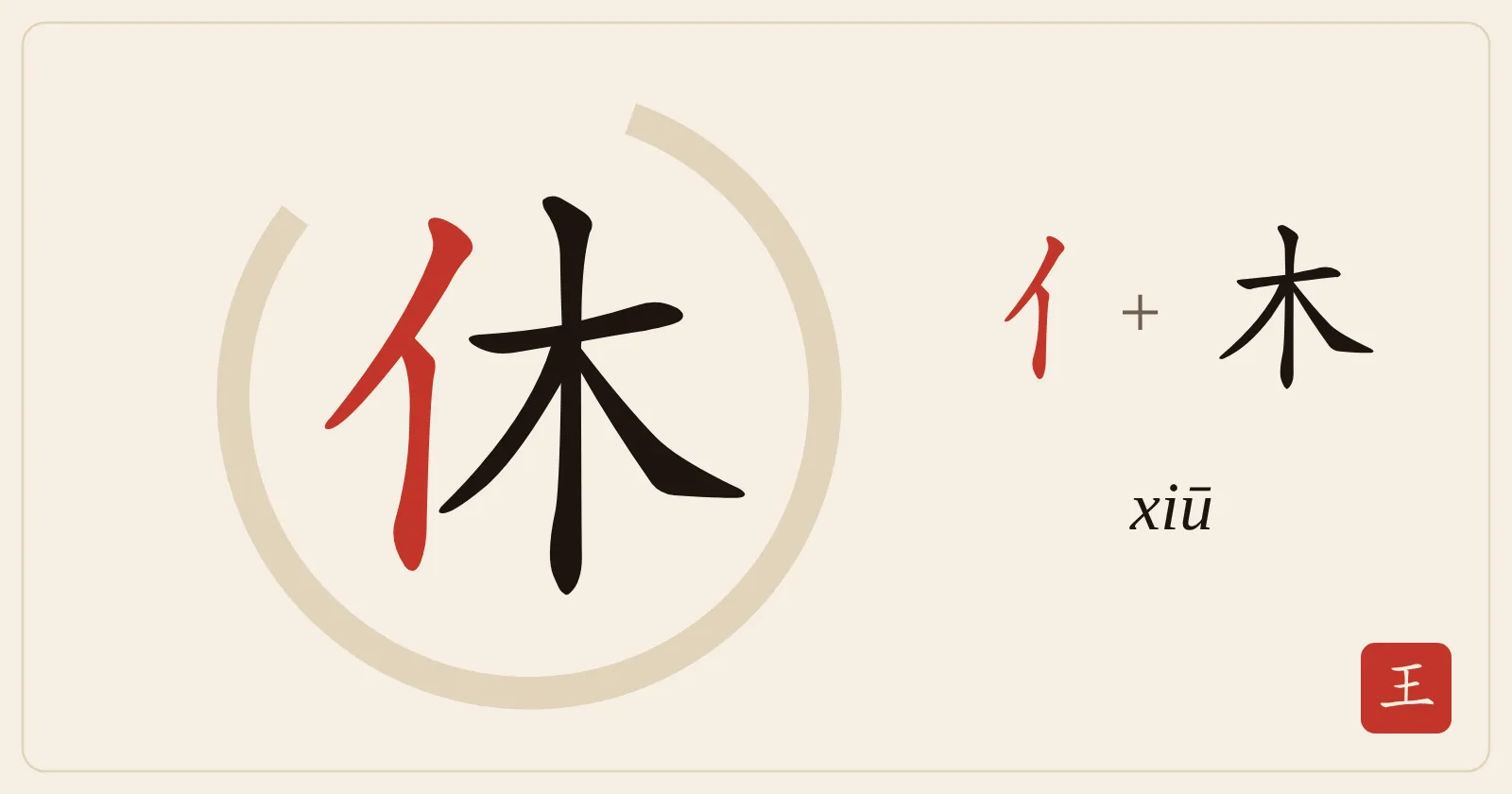 How to remember Chinese characters: 6 methods that workCharacter components and radicals, stroke order, handwriting, words instead of single characters, spaced repetition and mnemonics: how to learn HSK characters.
 How to start learning Chinese from zero: a plan for your first monthA four-week plan: pinyin and tones, your first HSK 1 words, characters and listening, 20–30 minutes a day.
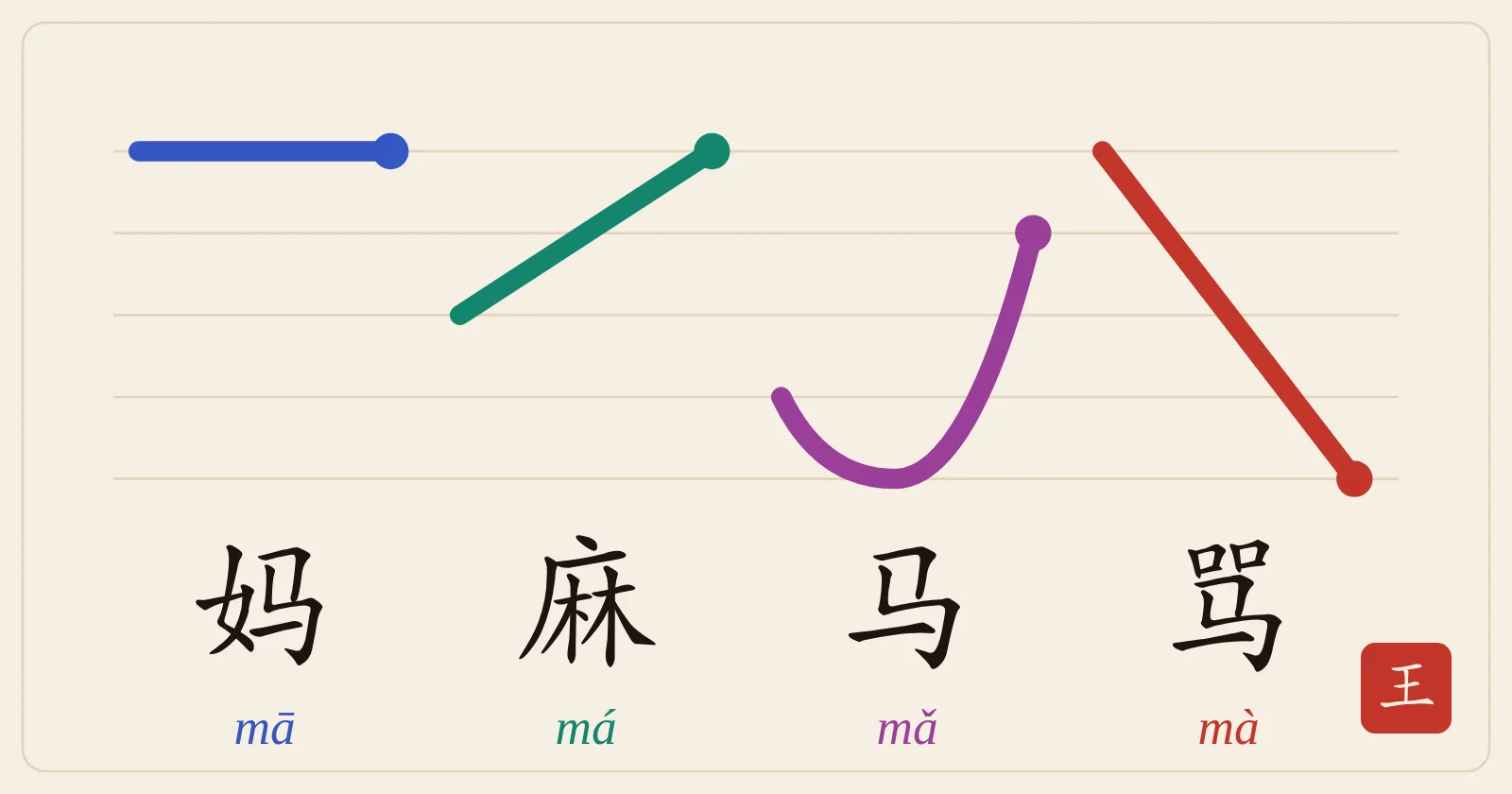 Chinese tones: how to hear and pronounce themThe four tones and the neutral tone, how tones change in 你好, 不 and 一, and five exercises that help you hear the difference.