
HSK 1 grammar
41 topics of HSK 1: the pattern, a short explanation and examples. The full explanation, common mistakes and exercises for each topic are in the app.

HSK 1 HSK 2 HSK 3 HSK 4 HSK 5 HSK 6 HSK 7–9
- A 是 B — "A is B": the copula 是是 links two nouns: "A is B". The negative is 不是. Do not use 是 with adjectives: "I'm busy" is 我很忙, not 我是忙.
- ……吗? — Yes/no questions with the particle 吗To ask a yes/no question, add 吗 to the end of a statement. The word order stays the same. Answer with the verb from the question: 是 / 不是, 有 / 没有, 去 / 不去.
- A 很 + adjective — "I'm busy": adjectives with 很, without 是In Chinese, an adjective can act as the predicate on its own — no 是 is needed. In statements, it is usually preceded by 很; this often does not mean "very", but simply makes the sentence complete: 我很忙 "I'm busy".
- 不 + verb / adjective — Negation with 不: "don't, won't, am not"不 means "not" for the present, future, and habits: 我不喝茶 "I don't drink tea", 明天我不去 "I won't go tomorrow". It goes directly before the verb or adjective. It cannot be used with 有: only 没有.
- A 的 B — Whose? Possession with 的: 我的书的 marks possession, like English "'s": 我的书 "my book", 老师的手机 "the teacher's phone". First the owner, then the thing. With family and groups you belong to, 的 is usually omitted: 我妈妈, 我们学校.
- 什么? 谁? — What? Who? — the question word goes where the answer goesIn Chinese questions, "what" and "who" go where the answer would go: 你喝什么? — 我喝茶。 Word order stays the same; 吗 is not needed. 什么 + noun means "what kind of"; 谁的 means "whose".
- V 不 V? — Yes–no questions: 去不去? 是不是?You can ask a yes–no question by repeating a verb or adjective with 不 in between: 你去不去? — are you going? Do not add 吗 at the end. With 有, use 有没有.
- …… 呢? — "And you?", "Where is…?": short questions with 呢呢 after a word asks a follow-up question, "what about…?": 我很好,你呢? "and you?". Without context, 呢 asks "where is?": 我的手机呢? "where is my phone?".
- A 也 + verb — "Also": 也 always goes before the verb也 means "also, too". It has one position: after the subject, before the verb or adjective: 我也是学生, 他也不去. Do not put 也 at the beginning or end of a sentence.
- A 都 + verb — "All, both": 都 before the verb都 means "all, both." It goes before the verb, after the group it refers to: 我们都是学生 "we are all students." 都不 means "none," 不都 means "not all." With 也: 也都.
- A 有 B / A 没有 B — "I have," "there is": 有 and 没有有 means "have; there is": 我有猫 "I have a cat," 房间里有电视 "there is a TV in the room." The negative is always 没有, never 不有.
- number + 个 / 本 / 只 … + noun — Measure words: 一个人, 两本书A measure word is required between a number and a noun: 一个人, 两本书, 三只猫. The most common is 个. "Two" before a measure word is 两, not 二. Age is number + 岁, with no measure word.
- 这 / 那 / 哪 + measure word + noun — This, that, which: 这本书, 那个人, 哪件?"This", "that", and "which" before a noun require a measure word: 这本书, 那个人, 哪件衣服? In "This is …", no measure word is needed: 这是我的书. Plural forms: 这些, 那些, 哪些.
- 几 + measure word? / 多少? — How many? 几 and 多少几 asks about a small number (usually up to 10) and requires a measure word: 几个孩子? 多少 asks about any number; the measure word can be omitted: 多少学生? For prices, the usual question is 多少钱?
- 第 + number + measure word — Ordinal numbers: 第一, 第二…第 (dì) + number forms an ordinal: 第一 — first, 第二天 — on the second day. Before a noun, use a measure word: 第一个人, 第二本书; with 天, 年, 次, no extra measure word is needed.
- A 在 + place (+ verb) — Where? 在 + place: "I'm at home", "I work at a hospital"在 + place means "in, at, on". On its own, 在 means "to be located": 我在家 "I'm at home". With another verb, the place goes BEFORE it: 我在家吃饭 "I eat at home", not after.
- …… 在 / 去 哪儿? 哪 国? — Where? Where to? 哪儿 / 哪里 and 哪国人哪儿 and 哪里 mean "where? where to?". They go where the place would be in the answer: 你去哪儿? — 我去超市。 哪 + 国 / measure word means "which": 你是哪国人?
- object + 上 / 里 / 前边 ; place + 有 / 是 + what — "On the table", "in the room": 上, 里, 前边 and "there is…"Location words follow the object: 桌子上 — on the table, 房间里 — in the room, 学校前边 — in front of the school. "There is…" — place + 有: 桌子上有一本书. "What is there is…" — place + 是: 前边是学校.
- who + 去 / 来 + place + action ; who + 坐 + transport + 去 + place — "Going to the shop to buy things", "taking a taxi": two actions in a rowTwo actions go in a row, without "in order to" or "by": 我去商店买东西 — I'm going to the shop to buy things (the second action is the purpose). 我坐出租车去学校 — I'm going to school by taxi (the first action is the means). The order follows how things happen.
- Subject + time + verb — Time comes before the verb: 我明天去Time expressions (today, tomorrow, at eight) go before the verb — right after the subject or at the very beginning: 我明天去 / 明天我去. If there is also a place: who → when → where → does what.
- ……年……月……号,星期……,……点……分 — Dates and time: year, month, day, hourDates and times go from largest to smallest: year → month → day → day of the week → part of the day → hours → minutes. 五月一号 "May 1," 星期一 "Monday," 晚上八点半 "half past eight in the evening."
- A 和 B — "And" between words: 和和 only connects people and things: 爸爸和妈妈, 苹果和牛奶. Two actions cannot be linked with 和 — put them side by side or use 也. 和 often needs 都: 我和他都……
- 想 / 要 + verb — "Want to": 想 and 要想 + verb means "want to, would like to" (softer). 要 + verb means "want to, be going to, need to" (firmer). 要 + thing means "want this, will take it". "Don't want to" is 不想.
- 会 / 能 + verb — "Know how to" and "can": 会 and 能会 means "know how to" (a learned skill): 我会说汉语. 能 means "can" (circumstances, time or energy allow it): 明天我能来. 不会 means "don't know how to"; 不能 means "can't" or "not allowed to".
- 可以 + verb — "May": 可以 and asking permission with 我可以……吗?可以 + verb means "may, be allowed to": 你可以坐这儿. Ask permission with 我可以……吗? and answer 可以 "yes, you may" or 不可以 "no, you may not".
- verb + 了 — The action happened: the particle 了了 after a verb indicates that an action has happened: 我买了一本书 "I bought a book". Without a quantity, 了 usually goes at the end: 我吃饭了. The negative form is 没有 + verb, without 了.
- …… 了 (at the end) — Sentence-final 了: "things have changed"了 at the very end of a sentence signals a change: "has become," "already," "no longer." 下雨了 — it has started raining; 我不去了 — I have changed my mind and am not going.
- 睡觉 / 说话 / 上课 … ; 和 + who + 说话 ; 下 了 课 — 睡觉, 说话, 上课: "verb + object" words睡觉, 说话, 上课, 下课, 上班, 下班, 看病, 生病 have a "verb + object" structure: 说话 — "speak words". They cannot take a second object: "talk to him" is 和他说话. The word can be split: 下了课, 上汉语课.
- 没有 + verb — "Did not do it": 没有 + verbTo say an action did not happen ("did not go", "did not eat"), put 没有 (没 in conversation) before the verb. Leave out 了: 我没有去. "Not yet" is 还没有.
- 太 + adjective + 了 — "Too…!", "So…!": 太……了太 + adjective + 了 means "too" or an enthusiastic "so …!": 太贵了! "too expensive!", 太好了! "great!". "Not very" is 不太 + adjective, without 了.
- 在 / 正在 + verb (+ 呢) — "Doing it now": 在 / 正在 + verbTo say "I'm doing this now", put 在 or 正在 ("right now") before the verb, often with 呢 at the end: 我在吃饭呢 "I'm eating". The negative is 没有在 + verb.
- …… 吧 — "Let's…", "probably…": the particle 吧吧 at the end softens a sentence. After a suggestion — "let's": 我们去吧. After a request — gentler: 你休息吧. After a guess — "probably…, right?": 你是老师吧?
- 请 + verb — Polite requests: 请 + verb请 at the start of a request is a polite "please": 请坐 "please sit down". 请 + person + verb means "invite, treat": 我请你吃饭. 请问 means "excuse me" before a question.
- 有点儿 + adj. / adj. + 一点儿 — "A little": 有点儿 and 一点儿有点儿 + adjective means "a bit" (usually with dissatisfaction): 今天有点儿冷. 一点儿 goes after an adjective or before a noun: 便宜一点儿 "a little cheaper", 喝一点儿水 "drink a little water".
- verb + 一下 — "Take a look", "for a moment": verb + 一下一下 after a verb makes an action brief and a request gentler: 看一下 "take a look", 休息一下 "rest for a bit". Similar to English "just", "for a moment", "a little".
- 再 + V — "Again, then": 再再 (zài) before a verb means "once more, again" for a future action: 我想再看一次; it also means "then, after that": 吃了饭再走. 再 is not used for a repetition that has already happened.
- 怎么 + verb? — How do you do it? 怎么 + verb怎么 before a verb asks "how, in what way?": 这个字怎么写? "How do you write this character?" With 不 / 没有 and surprise, it means "how come, why?": 你怎么没有来?
- …… 怎么样? — "How is it?", "How about it?": 怎么样怎么样 at the end of a phrase asks for an opinion: 这个菜怎么样? "What do you think of this dish?" After a suggestion, it means "how about it?": 我们明天去,怎么样?
- A 对 B + 好 / 说 — Attitude toward someone: 对 + person对 (duì) means "to, toward". 老师对我们很好 — the teacher treats us well. 对……说 means "say to someone", 对身体好 means "good for your health". The 对 phrase goes before the adjective or verb.
- who + 给 / 问 + person + what — "Give me an apple", "I'll ask you": 给 and 问 with two objects给 "give" and 问 "ask" are followed by two objects: first the person, then the thing. 请给我一个苹果 — please give me an apple. 我想问你一个问题 — I want to ask you a question. No prepositions between them.
- …… 的时候,…… — "When…": …… 的时候"When I eat" in Chinese is 我吃饭的时候: 的时候 goes AFTER the action, not at the beginning like English "when". This whole part comes before the main action.
Blog
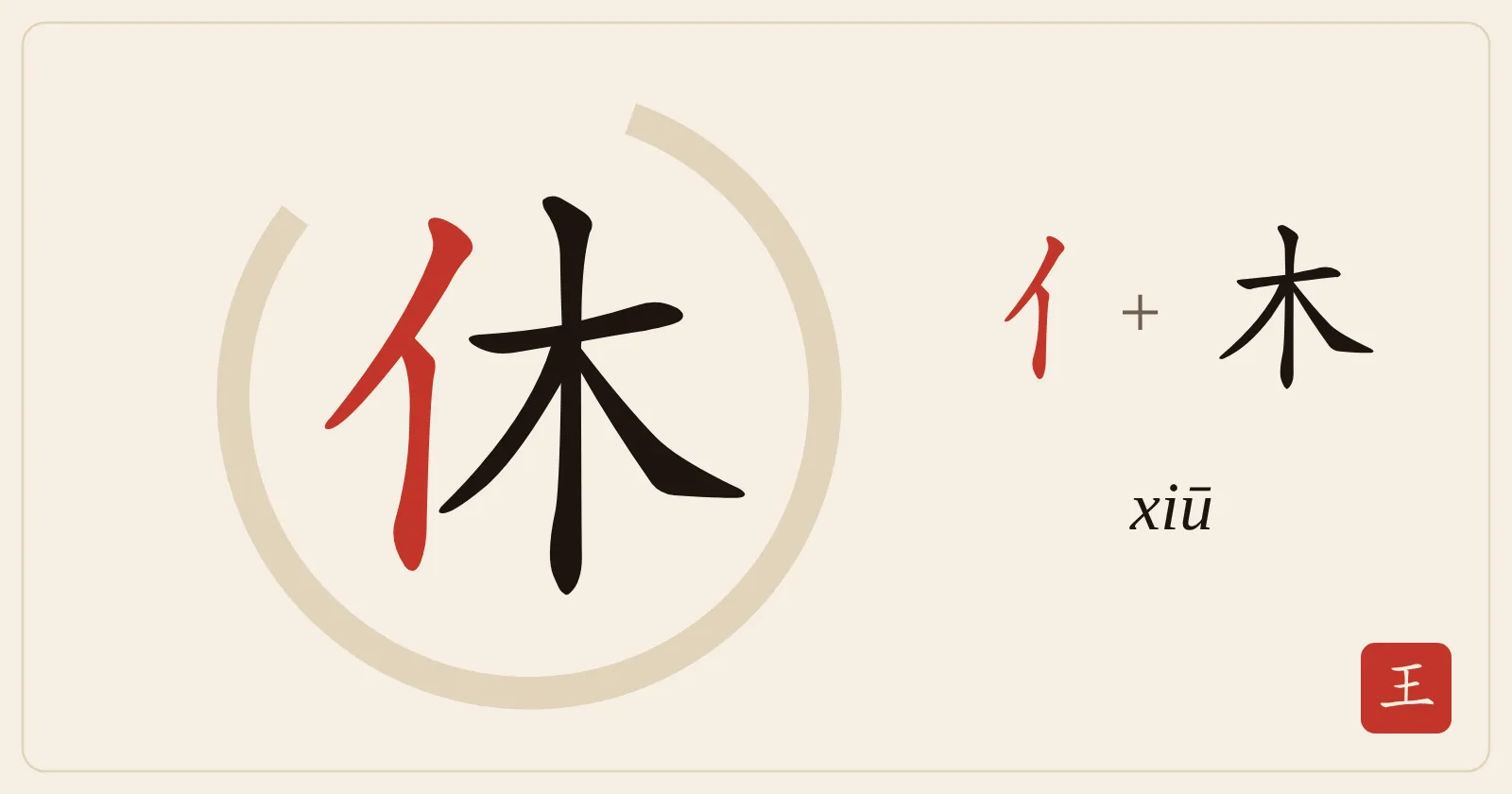 How to remember Chinese characters: 6 methods that workCharacter components and radicals, stroke order, handwriting, words instead of single characters, spaced repetition and mnemonics: how to learn HSK characters.
 How to start learning Chinese from zero: a plan for your first monthA four-week plan: pinyin and tones, your first HSK 1 words, characters and listening, 20–30 minutes a day.
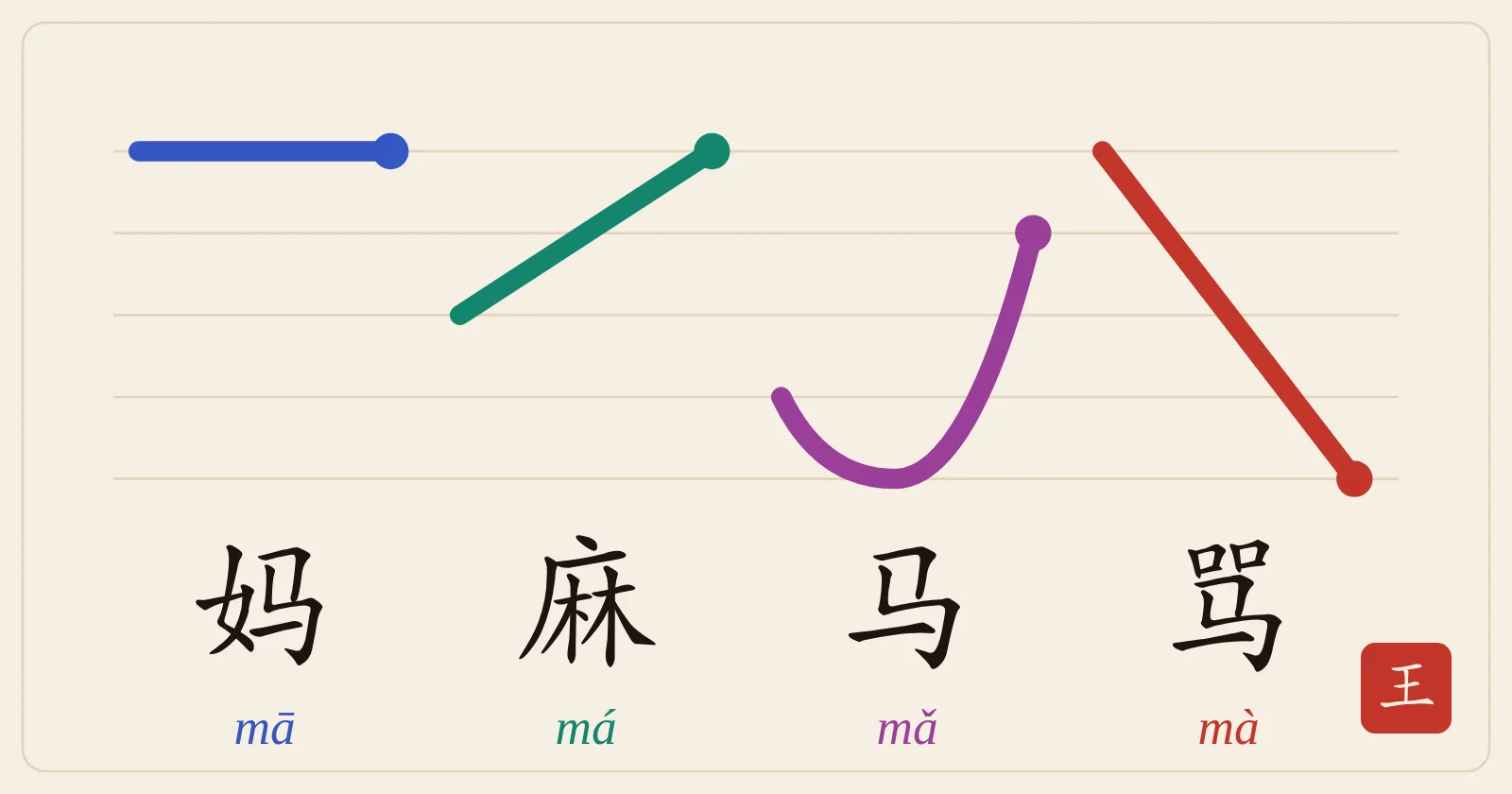 Chinese tones: how to hear and pronounce themThe four tones and the neutral tone, how tones change in 你好, 不 and 一, and five exercises that help you hear the difference.