How to start learning Chinese from zero: a plan for your first month
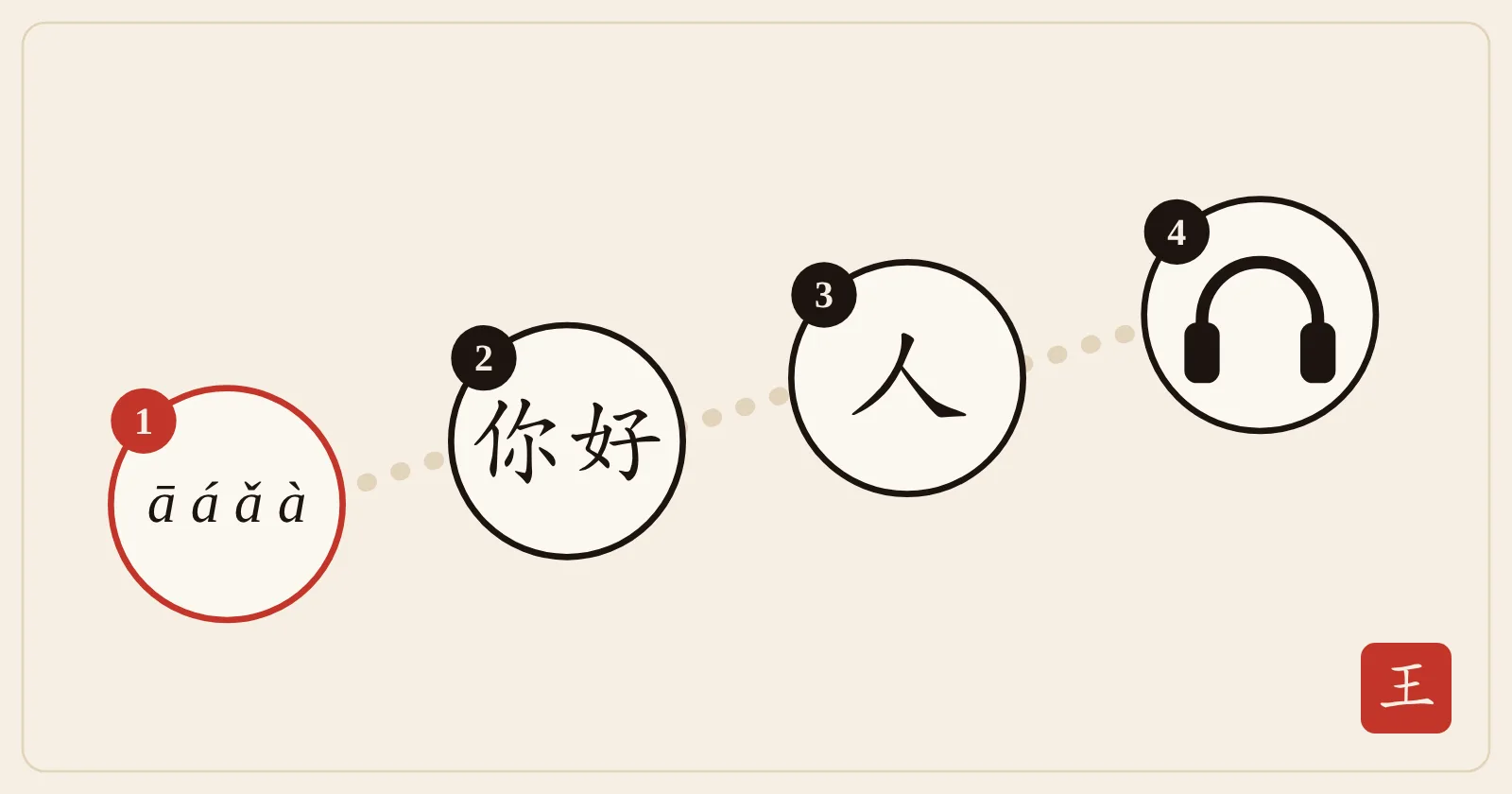
Chinese looks hard because of the characters and tones. But it has no cases, no grammatical gender and no conjugation: a verb does not change for person or tense. What matters at the start is doing things in the right order. Here is a plan for your first month.
Week 1: pinyin and tones
Pinyin is the way Chinese sounds are written in Latin letters. You will read every new word through it, so start here.
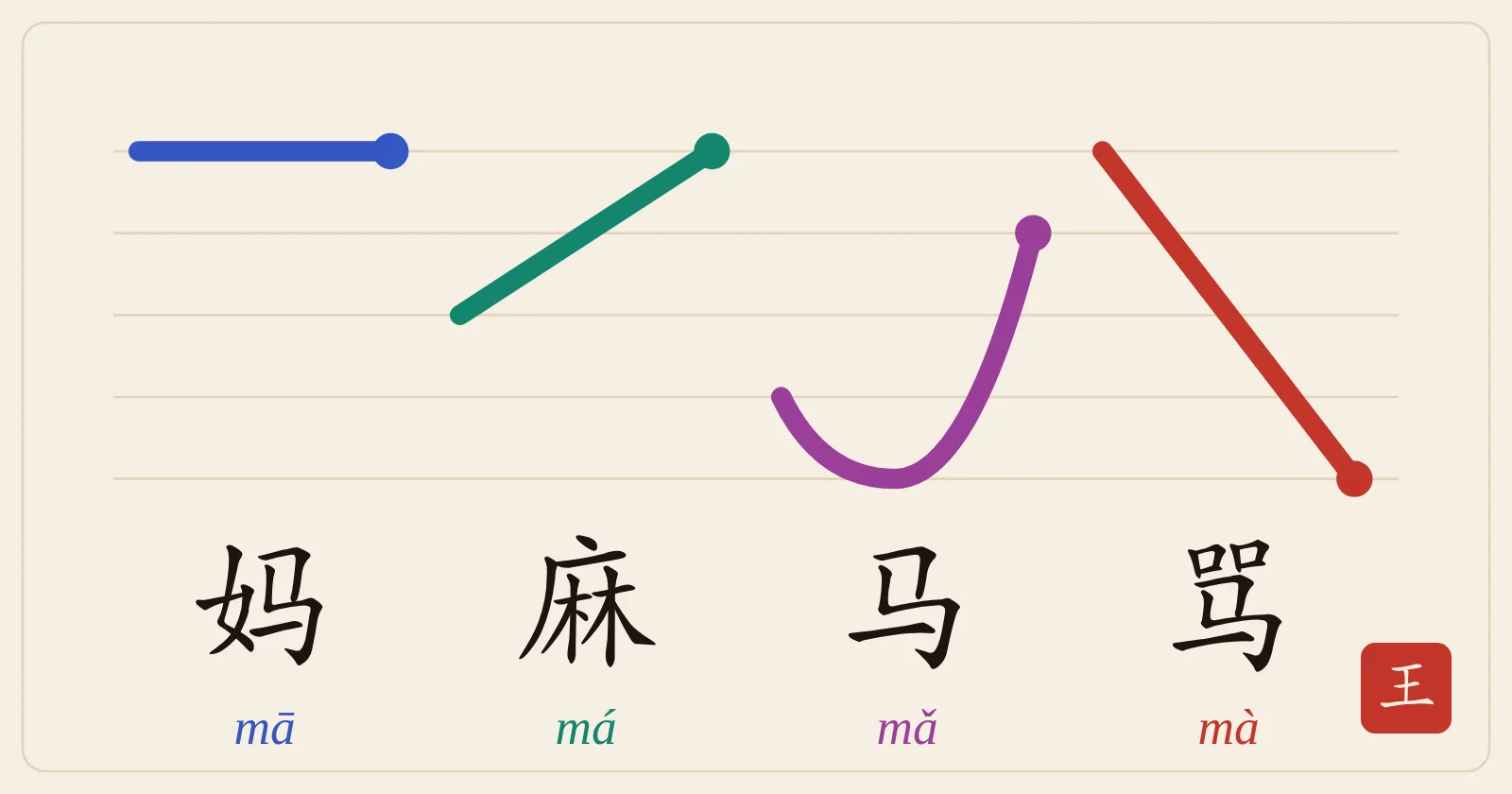
- Learn the four tones and the neutral tone. There is more about them in the article "Chinese tones".
- Practise the sounds English does not have: zh, ch, sh and r are said with the tip of the tongue curled back; j, q and x with the tip of the tongue behind the lower teeth, softly; ü is "ee" said with rounded lips, as for "oo".
- Do not rush: a word learned with the wrong tone has to be relearned later.
Week 2: first words and phrases
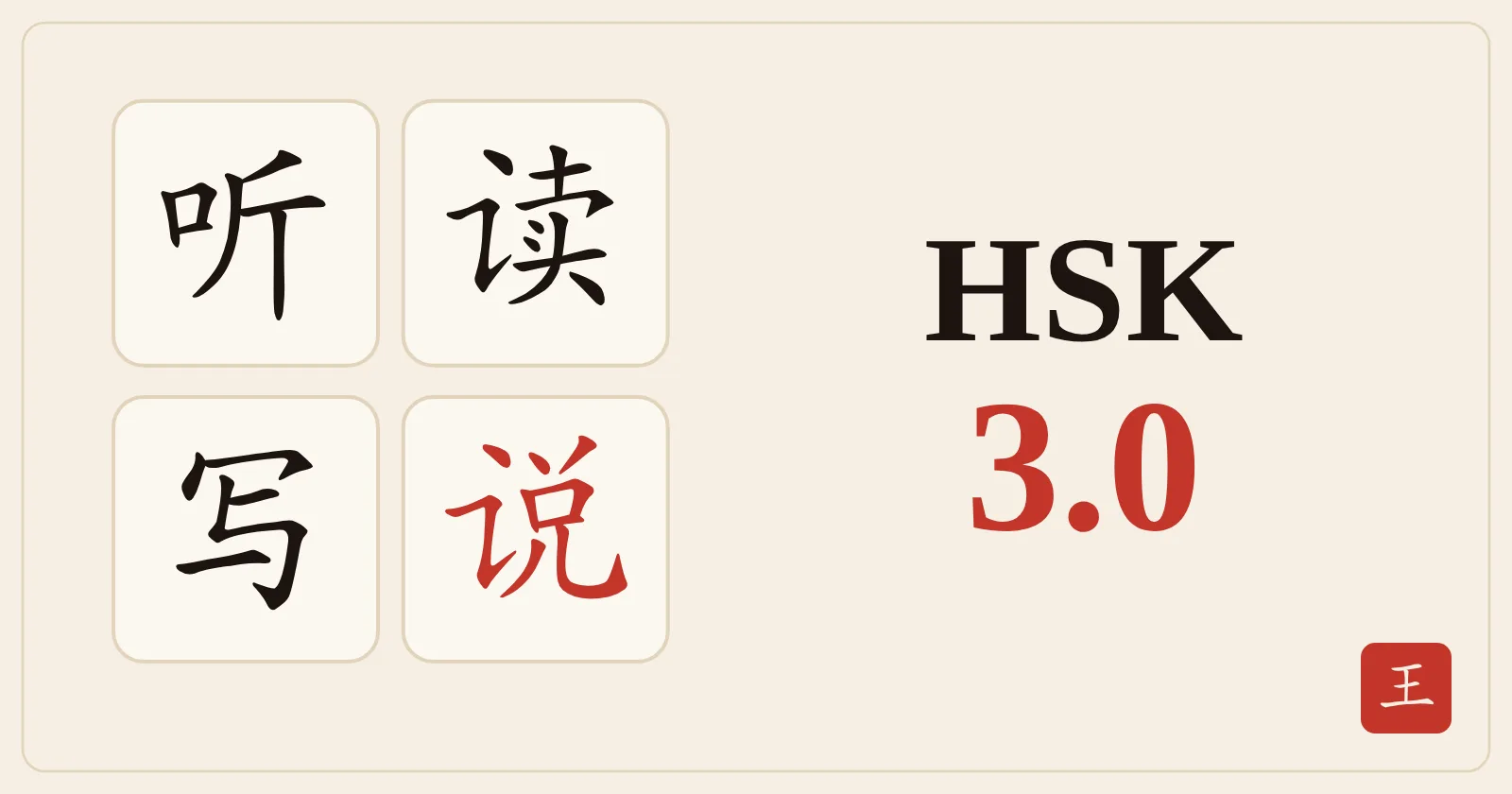
Learn 10 words a day from the HSK 1 list. Start with the most useful ones: 你 nǐ "you", 我 wǒ "I", 是 shì "to be", 不 bù "not", 好 hǎo "good", 谢谢 xièxie "thank you".
Put words into phrases straight away. The word order is simple: who, does what, to what. 我喝茶 wǒ hē chá "I drink tea". To ask a question, add 吗 ma at the end: 你是学生吗? nǐ shì xuésheng ma? "Are you a student?"
Week 3: characters
The first characters are simple, and later they appear inside more complex ones: 人 "person", 口 "mouth", 大 "big", 小 "small", 女 "woman", 子 "child". Together 女 and 子 make 好 "good".
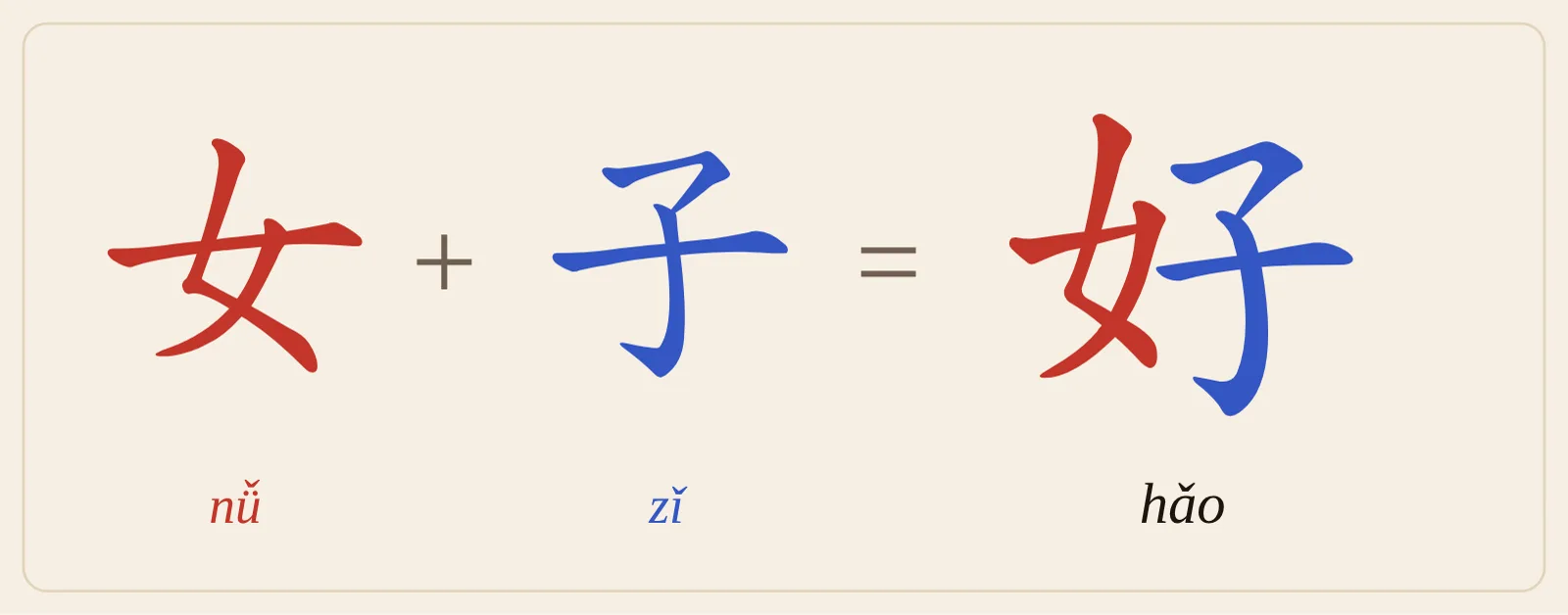
Write each new character by hand a few times and follow the stroke order: top to bottom, left to right, horizontal before vertical. There are more methods in the article "How to remember Chinese characters".
Week 4: listen and repeat
Every day, listen to short dialogues built from the words you know and repeat aloud right after the speaker. First with the text in front of you, then without it. This gets you used to real speech and trains your tones at the same time.
How much to study
20–30 minutes every day beats three hours once a week. Review yesterday's words before learning new ones. At this pace you will have about 200 words after a month, two thirds of HSK 1. For how many words the next levels need, see "How many words do you need for HSK?".
Master Wang puts this path into one app: the free "Basics" course with pinyin and tones, then HSK 1 lessons with audio, reviews and handwriting practice. All of HSK 1 is free.